
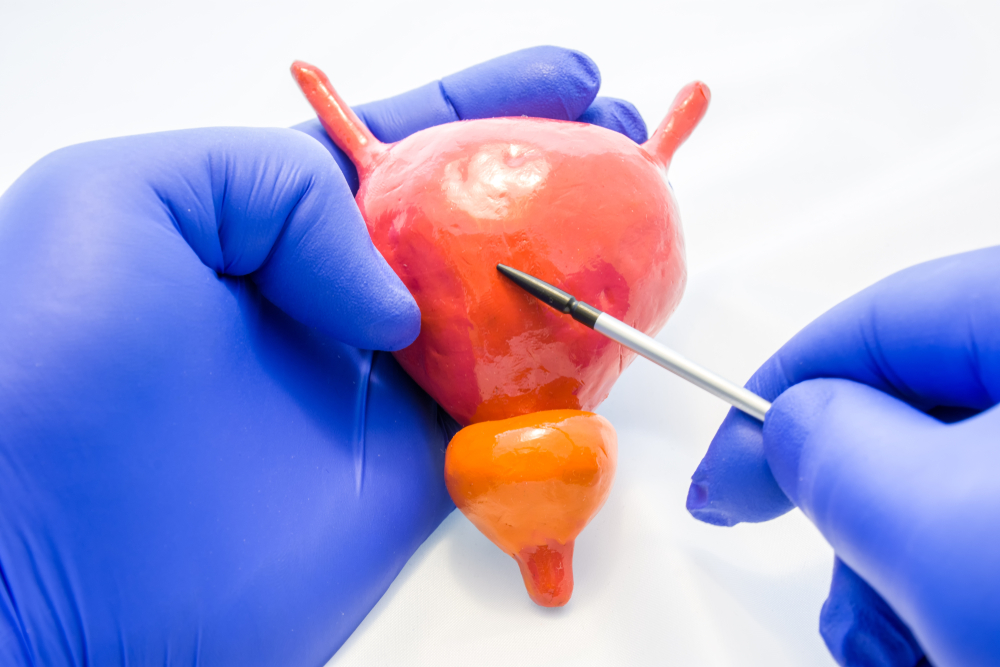
Blood in the urine is the main sign that should prompt a visit to a urologist. This article explains how bladder cancer is diagnosed, how treatment differs for superficial and invasive tumours, and how care is organised in Israel.
Signs of bladder cancer
- Blood in the urine is the most common first symptom. The urine may look pink or red, or blood may be found only on testing. There is usually no pain, and the blood may disappear for weeks.
- Changes in urination: frequent or urgent need to pass urine, burning, or a feeling of incomplete emptying.
The same complaints occur with infection, stones or an enlarged prostate, but blood in the urine always needs to be investigated. Smoking is the main risk factor; work with dyes and solvents and a previous bladder tumour also matter.
Diagnosis
- Urine test and culture to rule out infection; urine cytology to look for tumour cells.
- Cystoscopy, an examination of the bladder with a thin flexible instrument; the main diagnostic method.
- Transurethral resection (TURBT): the tumour is removed through the urethra under anaesthesia and examined. This is both the biopsy and the first step of treatment. The key question is whether the tumour has grown into the muscle layer of the wall.
- CT urography and pelvic MRI to assess the upper urinary tract, depth of invasion and lymph nodes.
Treatment by stage
Superficial (non-muscle-invasive) cancer
About three quarters of tumours are found at this point. After TURBT, medication is placed directly into the bladder, either BCG or a chemotherapy drug, to lower the risk of the disease returning. Recurrences are common, so follow-up cystoscopies are needed every few months for years.
Muscle-invasive cancer
The standard is chemotherapy followed by removal of the bladder (radical cystectomy), often with robotic assistance. Urine is then diverted through a stoma on the abdomen or a new bladder is formed from a segment of bowel; the option is discussed before surgery. Some patients are suitable for a bladder-preserving approach: TURBT, chemotherapy and radiotherapy.
Advanced cancer
Drug therapy is used: platinum-based chemotherapy, immunotherapy, antibody-drug conjugates, and targeted drugs when FGFR alterations are present. The regimen is chosen by a team of oncologists and urologists.
The outlook depends mainly on the depth of invasion and the stage; no clinic can guarantee a result.
Planning treatment in Israel
Send the clinic your reports, the cystoscopy or TURBT report, the pathology report and CT/MRI discs, and bring the slides and blocks with you for review. The work-up takes a few days. After TURBT you can usually travel home within a few days, and after cystectomy in three to four weeks. Check where you will receive the course of intravesical therapy and follow-up cystoscopies, and ask for a written estimate listing what is included.
Frequently asked questions
Does blood in the urine always mean cancer?
No, another cause is more common, but only testing can establish it.
Is cystoscopy painful?
Flexible cystoscopy is done under local anaesthetic; it is uncomfortable but takes only a few minutes.
Is the bladder always removed?
No. In superficial cancer the bladder is kept, and in invasive cancer some patients are suitable for bladder-preserving treatment.
How often is follow-up needed?
Usually every three months for the first two years, then less often; the schedule is set by the doctor.
Need a second opinion or bladder cancer treatment abroad? Send a request and Clinics Direct medical coordinators will help you choose a clinic and find out the cost of tests and treatment free of charge.
