
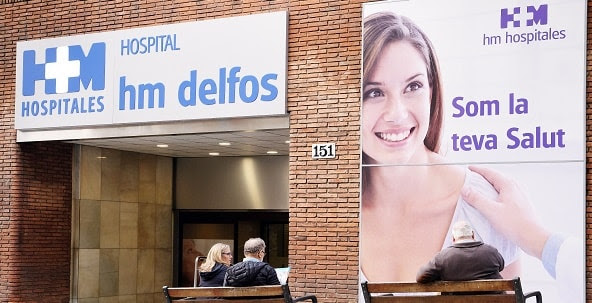
The HM Hospitales group opened a bariatric endoscopy unit at HM Delfos in Barcelona, led by Dr Gontrand López-Nava, a pioneer of the field in Spain. The unit offers stomach reduction without incisions and two years of follow-up by a multidisciplinary team.
- The unit is led by Dr Gontrand López-Nava, a pioneer of bariatric endoscopy in Spain who has applied new endoscopic techniques in the USA, Australia, Europe and Asia.
- The stomach is reduced endoscopically, through the mouth and without incisions; treatment is combined with psychological support, work with a nutritionist and physical activity.
- About 15% of the population of Catalonia has some degree of obesity.
In September 2019 the HM Hospitales group opened a bariatric endoscopy unit at HM Delfos in Barcelona. Its aim is to become a leading centre for treating excess weight and obesity in Catalonia.
Who leads the unit
Dr López-Nava heads the bariatric endoscopy unit at HM Sanchinarro University Hospital in Madrid, holds a doctorate in medicine and surgery and teaches at CEU San Pablo University. He has used endoscopy to treat obesity for more than 20 years, has published research on the subject, directs the MIBE forum (Madrid International Bariatric Endoscopy) and trains specialists from other countries.
In his view teamwork is decisive in bariatric endoscopy: treatment lasts two years and demands a great deal of time with the patient, and the doctor-patient relationship largely determines the result.
Methods used at HM Delfos
- Endoscopic sleeve gastroplasty (the Apollo method): the stomach is made smaller with stitches placed from the inside.
- The POSE method: folds are created in the stomach wall to reduce its volume and slow emptying.
- Intragastric balloon: temporarily occupies part of the stomach.
All procedures are done through the mouth with no abdominal incisions, so recovery is quicker than after bariatric surgery. They are still medical procedures under anaesthesia or sedation with their own risks, such as pain, nausea and, rarely, bleeding, and weight loss is usually smaller than after surgery. The method is chosen individually, taking into account anatomy, digestive function, general health, eating behaviour and the patient's level of physical activity.
A multidisciplinary approach
Patients work with gastroenterologists, psychologists, nutritionists and exercise specialists who help change diet and lifestyle. According to data from the bariatric endoscopy unit at HM Sanchinarro, dieting alone without support produces a lasting result in only a small share of people, while professional follow-up considerably improves the chances of success. No particular amount of weight loss can be guaranteed: the result depends both on the procedure and on changing habits.
Obesity in Catalonia: the figures
Excess weight raises the risk of diabetes, high blood pressure, stroke and several cancers. According to the 2017–2018 Catalan health survey, about 15% of residents were obese (17.46% of women and 12.29% of men), and 35.6% of children aged 6–12 were overweight or obese. Estimates cited by the clinic suggest that more than 27 million people in Spain will be overweight by 2030. Dr López-Nava stresses that a person who is 10 kg overweight today may be 20–30 kg overweight within a few years, so treatment should not be put off.
About HM Hospitales
HM Hospitales is a Spanish private hospital group led by doctors that combines patient care with research and teaching. In Barcelona it includes the multidisciplinary medical and surgical centre HM Delfos and the HM Sant Jordi clinic. For other approaches, see our article on obesity treatment.
Want to know whether endoscopic obesity treatment is right for you? Send a request and Clinics Direct medical coordinators will find out the clinic's terms and costs free of charge.
