
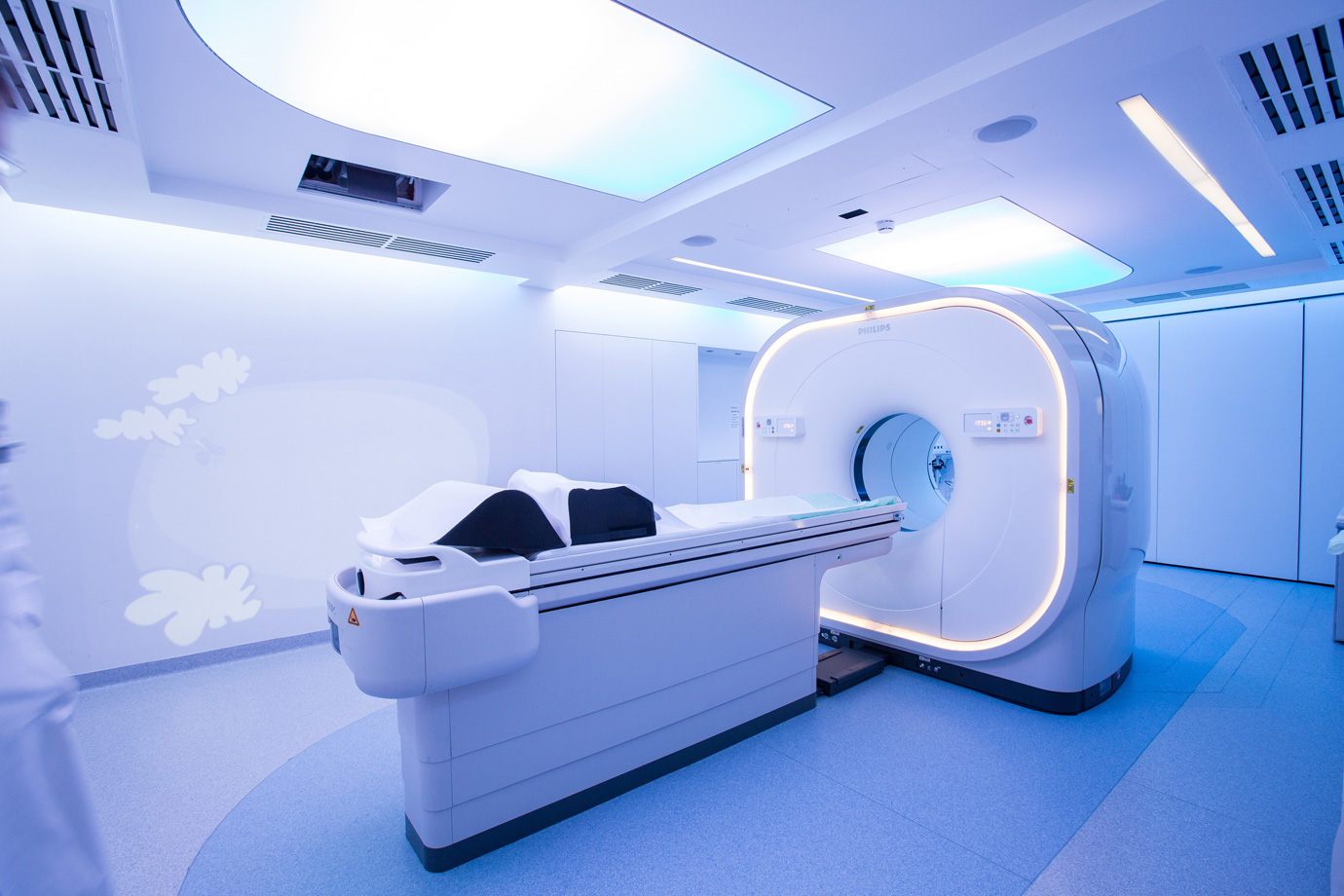
Siemens Healthineers and the HM Hospitales Research Foundation set up a PET/MRI chair in Madrid for training and research. Its first two projects explore the method in the early diagnosis of Parkinson's disease and in assessing treatment for depression.
The PET/MRI chair at HM Hospitales
Siemens Healthineers and the HM Hospitales Research Foundation created the Siemens Healthineers PET/MRI chair to expand training and knowledge of this imaging technology in Spain. The chair is based at HM Puerta del Sur University Hospital near Madrid and is led by Dr Lina García Cañamaque, head of the hospital's nuclear medicine department. Its programme covers staff training, research, technology transfer and dissemination of knowledge.
Siemens Healthineers in Spain described the chair as evidence of the company's commitment to innovation in medical technology, while HM Hospitales stressed that the agreement fits the group's principles: high specialisation, research, teaching and the adoption of new technology.
What PET/MRI is
PET/MRI is a hybrid method that acquires PET and MRI images simultaneously in a single examination. PET shows metabolism and tissue function; MRI shows the detailed structure of soft tissue, including the brain. Compared with PET-CT the patient receives a lower radiation dose, which matters for repeat scans and for children. At the time of the announcement HM Hospitales was the only hospital group in Spain with this technology.
The chair's first projects
Parkinson's disease
The project on cognitive impairment in Parkinson's disease is a long-term follow-up of patients using PET/MRI with two tracers: flutemetamol, which detects amyloid deposits, and fluorodeoxyglucose, which shows glucose metabolism in the brain. The aim is to identify early those patients at higher risk of cognitive decline so that treatment and support can be adjusted in time.
Depression
The second project studies changes in brain perfusion in patients with depression after electroconvulsive therapy. Researchers are testing whether PET/MRI can serve as a biomarker to predict response to this treatment and whether the changes observed help explain how it works.
What this means for patients
Parkinson's disease is diagnosed by a neurologist on clinical examination; imaging is used as a supporting tool in difficult cases. The projects described are research, so their results are a basis for future practice rather than an established standard. Even so, having PET/MRI and an experienced nuclear medicine team widens a clinic's diagnostic options in neurology and oncology.
About the partners
Siemens Healthineers is the healthcare business of Siemens, a manufacturer of equipment for imaging, laboratory diagnostics and molecular medicine.
The HM Hospitales Research Foundation is a non-profit organisation founded in 2003. It funds and coordinates translational research whose results can be applied quickly to patient care, and it organises scientific forums and educational programmes.
Have questions about diagnostics in Spain? Send a request and Clinics Direct medical coordinators will advise where to have the examination and find out its cost free of charge.
