
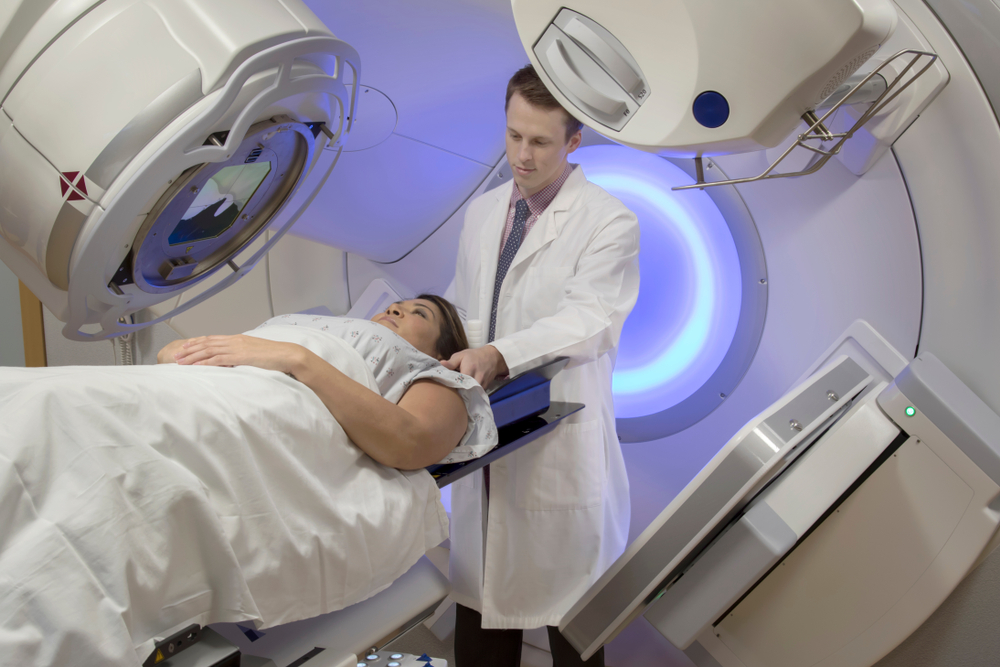
The Clinics Direct team visited a specialised radiotherapy clinic in Cologne to find out how radiation treatment is given, which machines and techniques are used and what a patient should expect. See the video and the article for details.
What is radiotherapy
Radiotherapy treats tumours with ionising radiation. Radiation damages the DNA of cells: healthy cells mostly recover, while tumour cells die. Treatment is planned and delivered by a radiation oncologist.
Types of radiotherapy
- External beam radiotherapy. Radiation is delivered by a machine called a linear accelerator. The patient does not become radioactive after a session.
- Internal radiotherapy (brachytherapy). The radiation source is placed inside the body, next to the tumour.
- Stereotactic radiosurgery. A small tumour is destroyed with one or a few high doses delivered with great precision, for example with CyberKnife.
When radiation is used
- as the main treatment, to destroy a tumour or stop its growth;
- before surgery — to shrink the tumour;
- after surgery — to destroy cells that may remain;
- together with chemotherapy, which makes radiation more effective;
- to relieve symptoms such as pain, pressure or bleeding (palliative radiotherapy).
Radiotherapy is widely used for breast, prostate and lung cancer, head and neck tumours, brain tumours, cancer of the uterus and other organs.
The first visit and planning
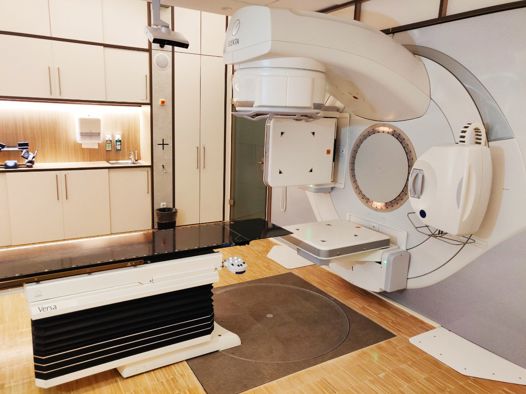
The radiation oncologist reviews your medical records, pathology and imaging — MRI, CT, PET-CT — and decides whether radiation is suitable. A simulation follows: you are positioned exactly as you will be during treatment, a planning CT is taken and marks are placed on the skin. Using these data, the doctor and a medical physicist calculate the plan so that the tumour receives the required dose and nearby organs receive as little as possible.
What happens during the course
- Sessions are usually given five days a week. The course lasts from one to seven weeks depending on the diagnosis and the goal; palliative courses are shorter.
- You spend 10–30 minutes in the treatment room, and the radiation itself takes a few minutes.
- You need to lie still and breathe normally. Radiation is painless: you cannot see or feel it.
- The staff leave the room but can see and hear you through a camera and intercom.
- Check images are taken before sessions to confirm accurate positioning.
- The doctor sees you once a week; blood tests are monitored when needed.
It is important not to miss sessions: interruptions make treatment less effective.
Side effects
Side effects depend on the area being treated and mostly settle after the course ends.
- Tiredness — the most common effect; short rests and walks help.
- Skin — redness, dryness and itching in the treated area; the area should be protected from the sun.
- Head — hair loss in the treated area, temporary swelling treated with steroids.
- Head and neck — dry mouth, painful swallowing; a dental check is needed before treatment.
- Chest — difficulty swallowing, cough, shortness of breath.
- Pelvis — frequent or painful urination, loose stools, rectal irritation.
Contact your doctor if you develop a fever, shortness of breath, vomiting that does not stop or marked weight loss.
Why patients choose radiotherapy in Germany
- modern linear accelerators with image guidance before every session;
- precise techniques — IMRT, VMAT, stereotactic radiotherapy;
- the treatment plan is agreed by a tumour board of oncologists, surgeons and radiologists;
- treatment is given on an outpatient basis, without a hospital stay.
See clinics in the oncology section.
Still have questions? Send a request — Clinics Direct coordinators will tell you whether radiotherapy is suitable for you, help you choose a clinic and find out the cost of treatment, free of charge.
