

How to recognise thyroid cancer: causes and first symptoms, types and stages, diagnosis, surgery and recovery, and survival rates by type and stage of the disease.
Causes of thyroid cancer
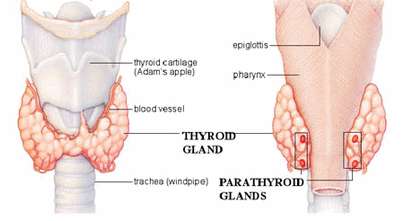
Thyroid cancer is a malignant tumour that develops from the follicular or parafollicular cells of the thyroid gland. The main factors that can lead to it are:
Hormonal changes in women during menopause, pregnancy and breastfeeding.
Hereditary conditions such as Cowden syndrome, Gardner syndrome and familial medullary thyroid carcinoma.
Exposure of the head and neck to ionising radiation, especially in childhood.
Thyroid adenoma and other nodules of the gland.
Long-term iodine deficiency.
Symptoms and signs of thyroid cancer
A malignant tumour usually looks like a nodule in the gland. Patients may complain of:
A lump in the front of the neck.
A feeling of a foreign body in the throat or of choking.
Discomfort when swallowing.
A persistent cough and shortness of breath.
Pain in the front of the neck.
Hoarseness.
Loss of appetite and weight loss.
Increased sweating.
None of these signs proves cancer: most thyroid nodules are benign. Only an examination can give the answer.
Types of thyroid cancer
Papillary. The most common type, at least 70% of cases. It grows slowly, usually starts in one lobe and responds well to treatment.
Follicular. About 5-10% of cases. It is more common in regions with iodine deficiency.
Medullary. About 5% of cases. It develops from the C-cells of the gland and may be hereditary.
Anaplastic. A rare type, no more than 3% of cases, usually in elderly patients. It grows quickly and is the hardest to treat.
Thyroid lymphoma. A rare tumour that often develops against the background of autoimmune thyroiditis.
Diagnosis of thyroid cancer
The following examinations are used to confirm the diagnosis and determine the stage:
Ultrasound of the thyroid gland and fine-needle biopsy of the nodule.
Radionuclide imaging (scintigraphy of the gland).
Blood tests for tumour markers: thyroglobulin, calcitonin and CEA.
Stages of thyroid cancer
Stage I: the tumour is confined to the gland, the capsule is intact and there are no metastases.
Stage II: the tumour is larger or there are isolated metastases in nearby lymph nodes.
Stage III: the tumour grows beyond the gland and spreads to the lymph nodes of the neck.
Stage IV: the tumour invades neighbouring structures or spreads to distant organs.
How do you know whether there are metastases?
It is impossible to detect metastases on your own. Doctors use imaging and blood tests for tumour markers, primarily thyroglobulin and CEA.
Surgery for thyroid cancer
The main treatment is total or subtotal thyroidectomy. At stages 1 and 2 the operation may be limited to removing one lobe and the isthmus of the gland. At stages 3 and 4 the whole gland is removed together with the regional lymph nodes and surrounding fatty tissue. The operation is performed through a horizontal incision in the lower part of the front of the neck.
After the operation
Hormone replacement: after removal of the gland, thyroid hormones are taken for life.
Radioactive iodine (I-131) therapy, usually about a month after surgery, when it is indicated.
Calcium and vitamin D.
Follow-up
The risk of recurrence is highest in the first two years. Check-ups are held at least once every 3 months during the first year and at least once every 6 months during the second year. They include ultrasound of the neck, examination of the lymph nodes and a blood test for thyroid-stimulating hormone.
Possible complications
Hypoparathyroidism.
Paresis of the recurrent laryngeal nerve, which affects the voice.
Bleeding and haematoma.
Infection of the wound.
With timely treatment most complications are resolved quickly.
Thyroid cancer: survival and prognosis

Although more cases of thyroid cancer are being registered, the outlook for this type of cancer is among the most favourable, because poorly differentiated tumours make up no more than 10% of all cases.
Prognosis by type
Papillary cancer. With timely diagnosis and comprehensive treatment, five-year survival is about 93% and ten-year survival about 88%.
Follicular cancer. Five-year survival is about 92%, ten-year survival 78-80%.
Medullary cancer. The outlook depends strongly on how early the tumour is found: when it is confined to the gland, results of treatment are good; when it has spread, they are worse.
Anaplastic cancer. The most aggressive type; it grows into surrounding tissues quickly, and the prognosis is poor.
Prognosis by stage
Stage 1. The tumour does not extend beyond the gland and has not spread to the lymph nodes; after surgery survival is about 98%.
Stage 2. Survival is 75-80% for younger patients and up to 70% for older patients.
Stage 3. The outlook depends on the patient's age and the chosen treatment; on average survival is about 40%.
Stage 4. The prognosis is the least favourable and depends on the type of tumour.
These are statistical averages. The prognosis for a particular patient can only be given by the treating doctor after an examination.
Still have questions? Call us or leave a request on our website: our medical coordinators will tell you about specialists, clinics and prices for thyroid cancer treatment abroad.
