
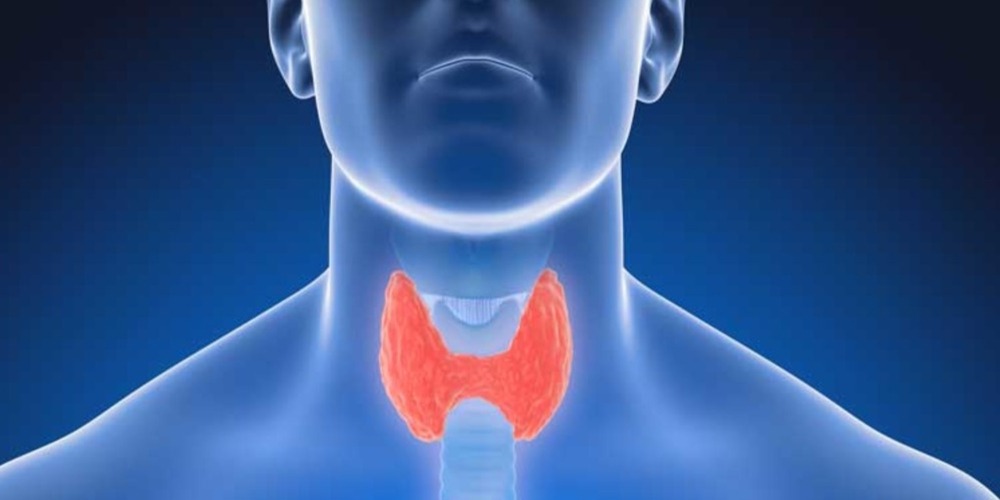
Thyroid diseases — hypothyroidism, hyperthyroidism, nodules, autoimmune thyroiditis and cancer — are among the most common endocrine disorders. We explain their symptoms, which tests are needed and how they are treated: with medication, radioactive iodine or surgery.
What the thyroid gland does
The thyroid is a small gland at the front of the neck. It takes up iodine and produces the hormones thyroxine (T4) and triiodothyronine (T3), which regulate metabolism, heart function, body temperature, growth and development. The pituitary gland controls it through thyroid-stimulating hormone (TSH). Too much hormone causes hyperthyroidism (thyrotoxicosis); too little causes hypothyroidism. Some conditions, such as nodules, occur with normal hormone levels.
Types of thyroid disease
Hypothyroidism and Hashimoto's thyroiditis
The most common cause of hypothyroidism is autoimmune thyroiditis, in which the immune system gradually damages the gland. Symptoms build up slowly: tiredness, sleepiness, feeling cold, dry skin, hair loss, swelling, weight gain, a slow pulse, constipation and poor memory. Severe hypothyroidism is called myxoedema. Congenital hypothyroidism in newborns causes delayed growth and development if untreated, so it is detected by screening right after birth.
Hyperthyroidism and Graves' disease
Graves' disease is an autoimmune condition in which the gland produces too much hormone. Typical signs are palpitations and arrhythmia, weight loss despite a good appetite, sweating, hand tremor, irritability, insomnia, an enlarged gland and, in some patients, bulging eyes (thyroid eye disease). Hyperthyroidism can also be caused by nodules that produce hormones on their own.
Thyroid nodules and adenoma
Nodules are found in a large share of adults, and the great majority are benign. They may cause no symptoms or, if large, a feeling of pressure in the neck and difficulty swallowing. The doctor's task is to find out whether a nodule is malignant and whether it produces excess hormones.
Thyroid cancer
There are papillary, follicular, medullary and anaplastic types. Papillary and follicular cancers grow slowly and respond well to treatment; anaplastic cancer is rare but aggressive. At an early stage the disease usually causes no symptoms and is found as a nodule on ultrasound. Read more in Thyroid cancer: symptoms, stages, treatment and prognosis.
Diagnosis
- TSH blood test — the first and most important test; free T4 and T3 are added if needed.
- Antibodies to thyroid peroxidase (anti-TPO) and to the TSH receptor — to confirm an autoimmune cause.
- Thyroid ultrasound — assesses size, structure and nodules.
- Fine-needle aspiration biopsy of suspicious nodules under ultrasound guidance.
- Thyroid scan (scintigraphy) — shows whether a nodule produces hormones.
- Calcitonin, CT or MRI — when cancer is suspected or a large goitre extends behind the breastbone.
Treatment of thyroid diseases
Hormone replacement
Hypothyroidism is treated with levothyroxine, a synthetic version of the body's own hormone. The dose is adjusted by the TSH level and checked periodically; on the right dose people live a normal life.
Antithyroid drugs
Treatment of hyperthyroidism usually starts with medicines that reduce hormone production (thiamazole). A course lasts 12–18 months; some patients achieve lasting remission afterwards.
Radioactive iodine therapy
The patient takes a capsule of radioactive iodine (I-131), which accumulates in thyroid cells and destroys them. The method is used for Graves' disease and toxic nodules, and after surgery for cancer — to destroy remaining thyroid tissue and metastases.
Surgery
Partial or total removal of the gland (thyroidectomy) is performed for cancer, a large goitre compressing the windpipe, suspicious nodules and severe hyperthyroidism that does not respond to other methods. Experienced centres operate with neuromonitoring of the recurrent laryngeal nerves to protect the voice, and in selected cases endoscopically, without a scar on the neck. Benign nodules are increasingly treated without surgery, by radiofrequency ablation.
Where thyroid diseases are treated abroad
Diagnosis, radioactive iodine therapy and thyroid surgery are offered by clinics in Turkey, Germany, Spain, Israel, Austria and South Korea. Compare them in the endocrinology, surgery and oncology sections.
Frequently asked questions
Which test checks the thyroid?
Start with a TSH blood test. If it is normal, a problem with thyroid function is unlikely.
Are thyroid nodules dangerous?
Most nodules are benign and only need monitoring. Nodules that look suspicious on ultrasound are checked with a biopsy.
Can you live without a thyroid gland?
Yes. After removal of the gland the patient takes levothyroxine daily, and with the right dose quality of life is not affected.
Is radioactive iodine therapy safe?
The method has been used for decades. It is not given during pregnancy or breastfeeding; after treatment for Graves' disease hypothyroidism often develops and is corrected with levothyroxine.
Need to see an endocrinologist or surgeon, or want a second opinion on a nodule? Send a request — Clinics Direct coordinators will help you choose a clinic and find out the cost of tests and treatment, free of charge.
