
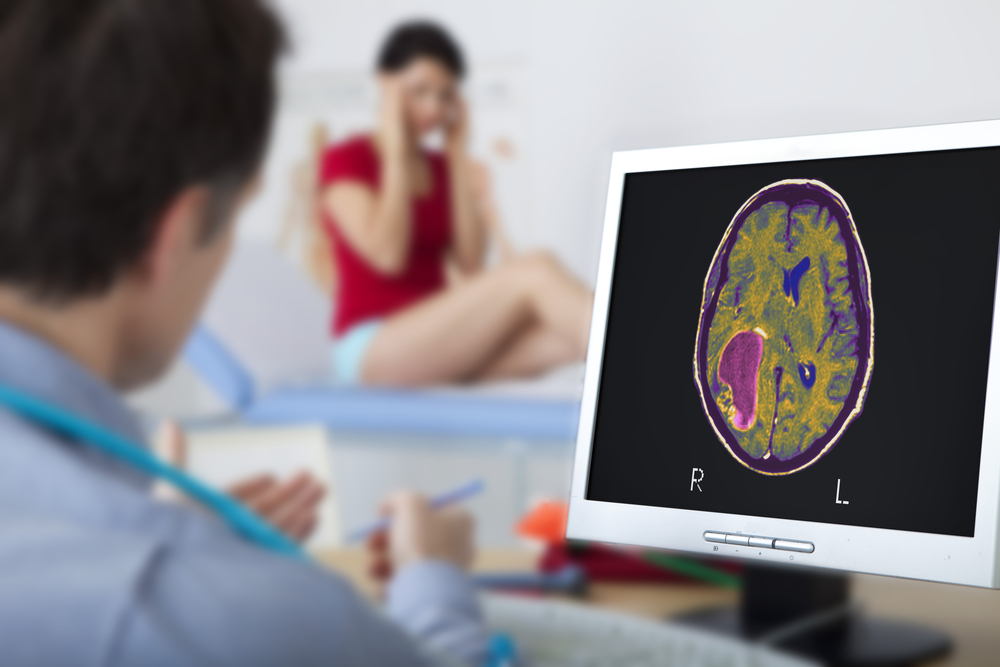
Not every brain tumour is malignant, but each one needs an exact diagnosis. This article explains the main tumour types, how they are investigated and how brain cancer is treated in Israel: surgery, radiosurgery, radiotherapy and drug therapy.
A brain tumour is not always brain cancer
Brain tumours can be benign or malignant; only malignant ones are called brain cancer. Even so, a benign tumour can be dangerous if it presses on vital structures.
- Primary tumours arise in the brain or its coverings: gliomas (including astrocytoma and glioblastoma), meningiomas, pituitary adenomas and vestibular schwannomas.
- Metastases are deposits from cancers elsewhere, most often lung, breast, kidney and melanoma. In adults they are more common than primary tumours.
For the outlook with different tumour types, see our article on brain tumours.
Symptoms
- a worsening headache, often in the morning, with nausea or vomiting;
- seizures that start for the first time in adulthood;
- weakness or numbness in an arm or leg, problems with walking and coordination;
- difficulty with speech, vision or hearing;
- changes in memory, behaviour or personality.
These signs are not specific to a tumour, but seizures, sudden limb weakness or speech problems need immediate medical attention.
Diagnosis in Israel
- Brain MRI with contrast is the main method; functional MRI, tractography, perfusion or spectroscopy are added where needed.
- Biopsy, taken during surgery or stereotactically through a small opening in the skull when the tumour cannot be removed safely.
- Molecular testing (IDH, 1p/19q, MGMT and others) determines the exact diagnosis, the outlook and the choice of drugs.
- Body CT or PET-CT when a metastasis is suspected and the primary tumour has to be found.
Treatment methods
Surgery
Neurosurgeons aim to remove as much tumour as possible without harming brain function. They use neuronavigation, intraoperative monitoring, fluorescence guidance and, for some patients, awake surgery when the tumour lies near speech or movement areas.
Radiotherapy and radiosurgery
Radiotherapy is given after surgery or instead of it. Small tumours and metastases are treated with radiosurgery, one or a few highly precise doses delivered by Gamma Knife or CyberKnife, with no incision.
Drug therapy
For high-grade gliomas the standard is temozolomide together with radiation, and tumour treating fields are added for some patients. Targeted drugs are used for IDH-mutant gliomas. Metastases are treated according to the primary cancer: targeted therapy and immunotherapy can sometimes act on deposits in the brain as well. More detail is in our article on brain glioma.
The plan is agreed by a neuro-oncology board. The outlook varies widely by tumour type, so a responsible clinic explains the chances and risks rather than promising a cure.
Planning treatment in Israel
Send the clinic your reports and MRI discs; a neurosurgeon can usually say remotely whether surgery is possible. If a biopsy has been done, bring the slides and blocks for review and molecular testing. Check whether the patient is fit to fly: with brain swelling or seizures, preparation and a doctor's clearance are needed. The hospital stay after surgery is about a week and radiotherapy lasts up to six weeks, so ask whether it can be given at home. Request a written plan and an estimate listing what is included.
Frequently asked questions
Is every brain tumour cancer?
No. Many tumours, including most meningiomas, are benign.
Can surgery be avoided?
Sometimes: small tumours are treated with radiosurgery, and some benign growths are only monitored.
Why is molecular testing needed?
It refines the tumour type and shows which drugs are likely to work.
How long does the work-up take?
Usually a few days; molecular results may arrive later.
Need a second opinion or brain tumour treatment abroad? Send a request and Clinics Direct medical coordinators will help you choose a clinic and find out the cost of tests and treatment free of charge.
