
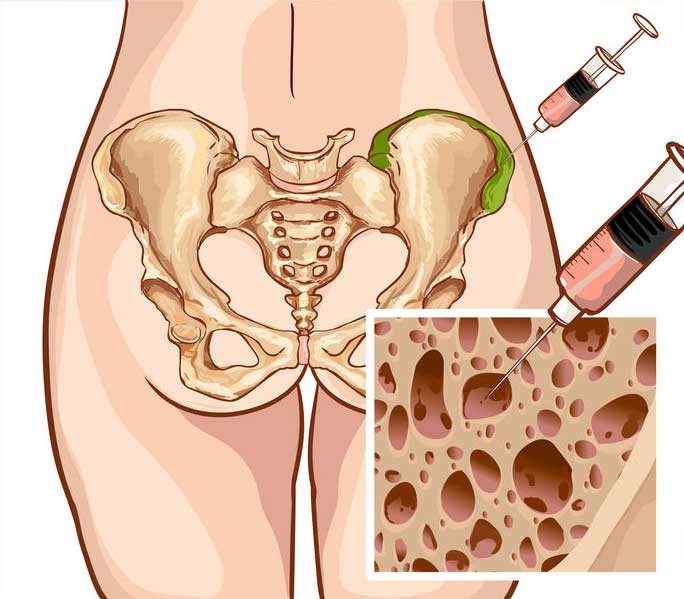
What bone marrow is, which diseases require a transplant, where donor cells come from, how the procedure is done and what graft-versus-host disease is — answers to the questions patients and their families ask most often.
What is bone marrow and what does it do
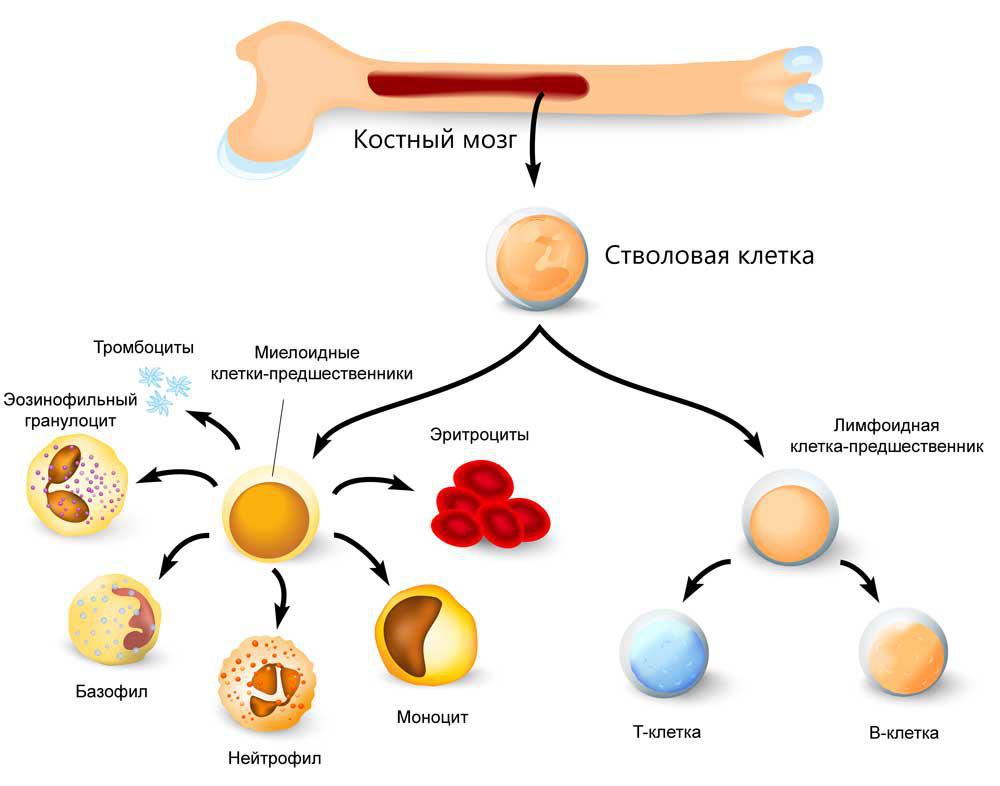
Bone marrow is the blood-forming organ. All blood cells are constantly produced there from stem cells:
- red blood cells — carry oxygen from the lungs to organs and tissues;
- platelets — stop bleeding from damaged vessels;
- white blood cells — protect against infection: neutrophils and monocytes destroy bacteria and fungi, while lymphocytes (T, B and NK cells) provide immunity.
Blood cells do not live long, so the bone marrow renews them throughout life. In children, blood-forming (red) marrow fills almost all bones; in adults it remains in the pelvis, vertebrae, ribs, breastbone and skull.
Which diseases are treated with a transplant
- acute lymphoblastic leukemia and acute myeloid leukemia — at high risk of relapse or after relapse;
- chronic myeloid leukemia when targeted drugs have stopped working;
- myelodysplastic syndromes, myelofibrosis, aplastic anaemia;
- multiple myeloma;
- lymphomas, including Hodgkin lymphoma — in relapse or resistance to treatment;
- some childhood tumours — neuroblastoma, Ewing sarcoma, medulloblastoma (see paediatric oncology);
- inherited immune deficiencies and blood disorders such as thalassaemia.
Which tests are done before a transplant
- full blood count and biochemistry (see Blood tests in leukemia);
- bone marrow aspiration with a cell count and histology;
- immunophenotyping, cytogenetic and molecular tests — to define the disease type and prognosis;
- HLA typing of the patient and potential donors;
- assessment of the heart, lungs, kidneys and liver, infection screening.
Where the cells come from
Autologous transplant. Stem cells are collected from the patient, frozen, and returned after high-dose chemotherapy. This is most often used for myeloma and lymphomas.
Allogeneic transplant. Cells come from a healthy donor — a matched brother or sister, an unrelated donor from an international registry, or a half-matched relative (haploidentical transplant). Cord blood is another source. Today cells are mostly collected from the blood on a cell separator, less often from the pelvic bone under anaesthesia.
How the procedure is done
Conditioning
Before the transplant the patient receives chemotherapy, sometimes with total body irradiation. It destroys tumour cells and suppresses the patient's own immune system so that the donor cells are not rejected. The regimen and doses depend on the diagnosis, age and condition of the patient.
Stem cell infusion
The stem cell suspension is infused into a vein — much like an ordinary blood transfusion. The cells find their own way to the bone marrow and start producing new blood cells within 2–4 weeks. During this time the patient stays in a sterile room.
What is graft-versus-host disease
After an allogeneic transplant, the donor's immune cells may see the patient's tissues as foreign and attack them. This complication affects a considerable share of patients — more often with an unrelated donor — and shows as a rash, digestive problems or liver involvement. Immunosuppressive drugs are given to prevent and treat it.
There is also a useful side: donor cells attack remaining tumour cells too (the graft-versus-leukemia effect), which lowers the risk of relapse.
What is the survival rate after a bone marrow transplant
Figures vary widely — roughly from 20% to 90% — depending on the disease, its stage, the patient's age, the type of transplant and donor match. Every case is individual, and only a doctor who knows all the details can give an honest prognosis.
Life after a transplant
What care does the patient need
Until immunity recovers, any infection is dangerous, so the patient stays in a sterile room under constant supervision. For several months after discharge, regular blood tests, preventive medicines, care with food and limited contacts are needed; vaccinations are repeated later.
Are there consequences for the donor
The donor's bone marrow recovers fully within a few weeks. Serious complications are rare; after collection from the bone the lower back may ache for a few days, and after collection from the blood, bone aches and tiredness are possible.
Where to have a bone marrow transplant
A comparison of countries, clinics and approximate prices is in the article Bone marrow transplant abroad, and the list of centres is in the haematology-oncology section.
Clinics Direct specialists will help you choose a clinic for a bone marrow transplant and obtain an individual treatment plan with prices. Send a request on the website — it is free of charge.
