
Glioma is the most common primary malignant tumour of the central nervous system. We explain the types and grades of glioma, the symptoms that should raise concern, how it is diagnosed and treated, and what the prognosis depends on.
What is a glioma
A glioma is a tumour that develops from glial cells, which surround and support neurons. Gliomas account for about a quarter of all primary brain tumours and the great majority of malignant ones. They are usually located in the cerebral hemispheres, less often in the brainstem, cerebellum, spinal cord or optic nerve. Gliomas grow by infiltrating the surrounding tissue, so they have no clear border.
Causes and risk factors
The exact cause of most gliomas is unknown. The tumour arises from mutations that accumulate in cells over a lifetime. Proven risk factors are previous radiation to the head and rare hereditary syndromes such as neurofibromatosis and Li-Fraumeni syndrome. Studies have not confirmed a link with mobile phones.
Types and grades
By cell type, gliomas are divided into astrocytomas (including glioblastoma), oligodendrogliomas and ependymomas. The WHO classification defines four grades:
- Grade 1 — slow-growing tumours such as pilocytic astrocytoma in children; often cured by surgery;
- Grade 2 — diffuse low-grade gliomas that grow slowly but may become more aggressive over time;
- Grade 3 — anaplastic tumours with actively dividing cells;
- Grade 4 — the most aggressive tumours, above all glioblastoma.
Today the diagnosis is refined with molecular markers: an IDH mutation and 1p/19q codeletion are linked to a better outlook, and MGMT methylation predicts a better response to chemotherapy.
Diffuse brainstem glioma
It is mostly found in children aged 5–10. The tumour lies in the area that controls breathing, heart function and movement, so it cannot be removed; radiotherapy is the main treatment. The prognosis unfortunately remains poor, and families should ask about clinical trials.
Optic nerve glioma
This is usually a slow-growing childhood tumour, often associated with neurofibromatosis type 1. It causes loss of vision, a squint or bulging of the eye. Some of these tumours are only monitored, others are treated with chemotherapy.
Symptoms of glioma
- headache that is worse in the morning and poorly relieved by painkillers;
- nausea and vomiting;
- new-onset seizures;
- weakness or numbness in an arm or leg, loss of coordination;
- problems with speech, vision or memory;
- changes in behaviour and personality.
Read about growth rates of different tumours in the article How fast a brain tumour develops.
Diagnosis
- contrast-enhanced brain MRI — the main method; MR spectroscopy, perfusion, functional MRI and tractography are added for surgical planning;
- amino acid PET — to distinguish active tumour from post-treatment changes;
- biopsy or tumour removal with histological and molecular analysis (IDH, 1p/19q, MGMT) — an accurate diagnosis is impossible without it.
Treatment of glioma
Surgery
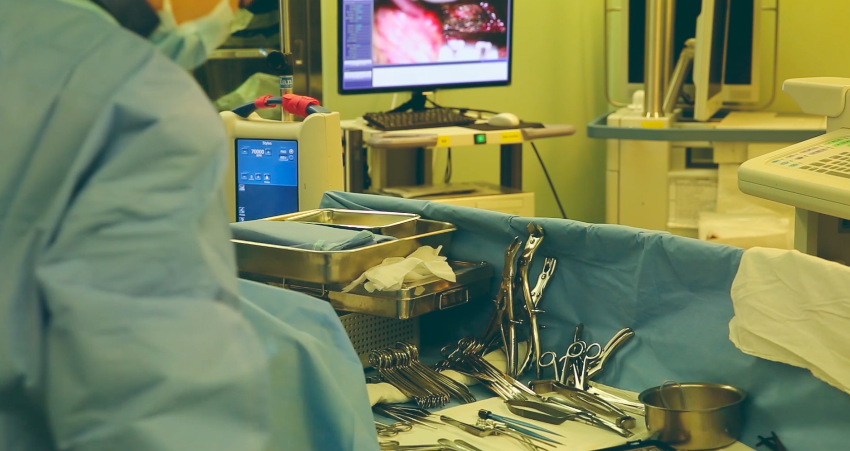
The aim is to remove as much tumour as possible without damaging critical brain areas. Leading neurosurgery centres use neuronavigation, intraoperative MRI, fluorescence guidance (5-ALA), brain mapping and awake surgery.
Radiotherapy
Radiotherapy is given after surgery for grade 3–4 gliomas and some grade 2 tumours, and when surgery is not possible. For children and tumours near critical structures, some clinics offer proton therapy.
Chemotherapy and targeted drugs
The standard for glioblastoma is radiotherapy combined with temozolomide, followed by further cycles of the drug. The PCV regimen is used for oligodendrogliomas. For IDH-mutant gliomas, a targeted IDH inhibitor has already been approved in some countries. Tumour treating fields (TTFields) are also used for glioblastoma.
Radiosurgery
Gamma Knife and CyberKnife have a limited role — mostly for small recurrences, because diffuse gliomas have no clear borders.
Folk remedies
Herbal decoctions, tinctures and other alternative remedies do not stop glioma growth, and some are toxic or interact with medicines. Choosing them over treatment means losing time.
Prognosis and survival
The outlook depends on the tumour grade, molecular markers, age, general health and the extent of removal. After removal of a pilocytic astrocytoma most patients live for decades. People with IDH-mutant grade 2 gliomas often live more than 10 years. For glioblastoma, median survival with standard treatment is about 15 months, although some patients live considerably longer. These are averages — only a doctor who sees all the results can give an individual prognosis.
Frequently asked questions
Is glioma always cancer?
No. Grade 1 gliomas grow slowly and are often cured by surgery, whereas grade 3–4 tumours are malignant.
Can a glioma be removed completely?
Well-defined grade 1 tumours — yes. Diffuse gliomas infiltrate healthy tissue, so additional treatment and regular follow-up MRI are usually needed after surgery.
Where is glioma treated abroad?
In neuro-oncology centres in Germany, Israel, Turkey, Spain and South Korea — see clinics in the neurosurgery and oncology sections.
Still have questions? Send a request — Clinics Direct medical coordinators will help you choose a clinic and neurosurgeon and find out the cost of treatment, free of charge.
