


Bowel cancer is one of the most frequently diagnosed malignant diseases, and it is equally common all over the world. It most often affects the large bowel, but a tumour can also develop in the small bowel.
Causes
The general factors that predispose to a malignant process in the bowel include:
A hereditary predisposition to bowel cancer.
Familial polyposis.
Lynch syndrome.
Dietary factors such as regular alcohol consumption and excessive fatty and fried food.
A sedentary lifestyle (physical inactivity).
Chronic constipation.
Smoking.
Ulcerative colitis.
Crohn's disease.
Solitary polyps of the large bowel.
Diverticular disease of the large bowel.
In addition, metabolites of steroid hormones, derivatives of tyrosine and tryptophan, amines and aromatic hydrocarbons have a carcinogenic effect on the intestinal epithelium.
First signs of bowel cancer
Different symptoms may prevail depending on which part of the bowel is involved. The general clinical symptoms of bowel cancer include:
Aversion to fried and fatty food.
Reduced appetite or no appetite at all.
Sudden weight loss.
Bright red blood in the stool.
A constant feeling of heaviness in the abdomen that is not related to overeating.
Alternating constipation and diarrhoea.
A drop in blood haemoglobin.
Signs of colon cancer
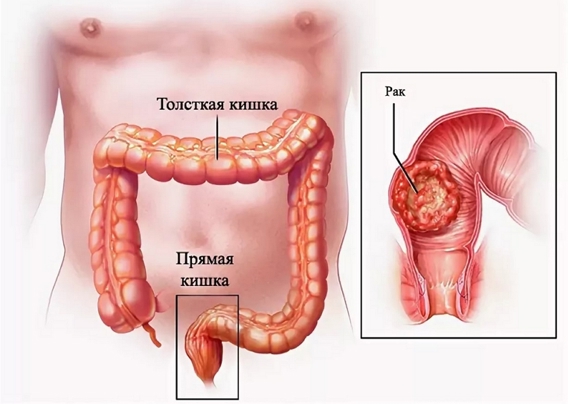
The following clinical symptoms point to cancer of the large bowel:
Pain under the right ribs or around the navel.
Loss of appetite.
Nausea and vomiting.
Increased gas in the bowel.
Chronic constipation alternating with diarrhoea.
Progressive anaemia.
Bowel obstruction.
Pus, mucus or blood in the stool.
Signs of rectal cancer
In the early stages the disease causes no symptoms. As the cancer progresses, the clinical picture includes:
Bright red blood from the anus, blood in the stool.
Ribbon-like or pencil-thin stool.
Increasing anaemia.
Chronic constipation.
Pain in the rectal area.
Signs of small bowel cancer
Small bowel cancer is accompanied by cramping abdominal pain that comes at intervals. Nausea and vomiting, bloating, unstable stool, progressive weight loss and intoxication also come to the fore.
Stages
In clinical practice the following stages of a bowel tumour are distinguished:
Stage 0. Precancerous changes appear.
Stage 1. Atypical cells begin to divide uncontrollably.
Stage 2. The tumour grows actively.
Stage 3. The tumour spreads beyond the bowel and there are signs of metastasis.
Stage 4. Metastases are found in other organs and lymph nodes, and marked intoxication develops.
Metastases
This type of cancer spreads to the lymph nodes, lung tissue, liver and pelvic bones.
Diagnosis
When bowel cancer is suspected, the diagnostic plan includes:
Plain abdominal X-ray.
Contrast barium enema.
Sigmoidoscopy.
Ultrasound.
Treatment
Surgery is the radical treatment for bowel cancer. Radiotherapy and chemotherapy are also used.
Radiotherapy and chemotherapy
Chemotherapy drugs used for bowel cancer include fluorouracil, leucovorin, capecitabine and irinotecan. External beam and contact radiotherapy are used for treatment. The tumour may also be irradiated before and after surgery.
Outlook
The outlook for survival and quality of life in bowel cancer depends directly on the stage at which the malignant process was found. If treatment was given at stage 1, the five-year survival rate is 90 to 100%. At later stages the figures are lower, and at stage 4 the outlook is the least favourable. Only a doctor can give an accurate prognosis in each case after an examination.
Prevention
Prevention means regular follow-up of patients at risk of bowel cancer. The risk group includes people with so-called precancerous conditions. Changes to lifestyle and diet are also needed. Screening methods (colonoscopy, faecal occult blood test) are very important. If a patient has previously been diagnosed with colorectal cancer and has had surgery, they need a comprehensive check-up and a consultation with an oncologist at least once every 3 months. Regular check-ups help to prevent a recurrence or detect it in time.
Depending on where the tumour is located, radical treatment of bowel cancer involves surgery followed by a colostomy, reconstructive surgery and closure of the stoma. If the malignant process is in the ascending colon or the caecum, a right hemicolectomy is performed. If the tumour is in the transverse colon, that section is resected, and for cancer of the descending colon a left hemicolectomy is performed.
Still have questions? You can call us or leave a request on our website, and experienced medical coordinators will answer your questions about specialists, clinics and treatment prices.
