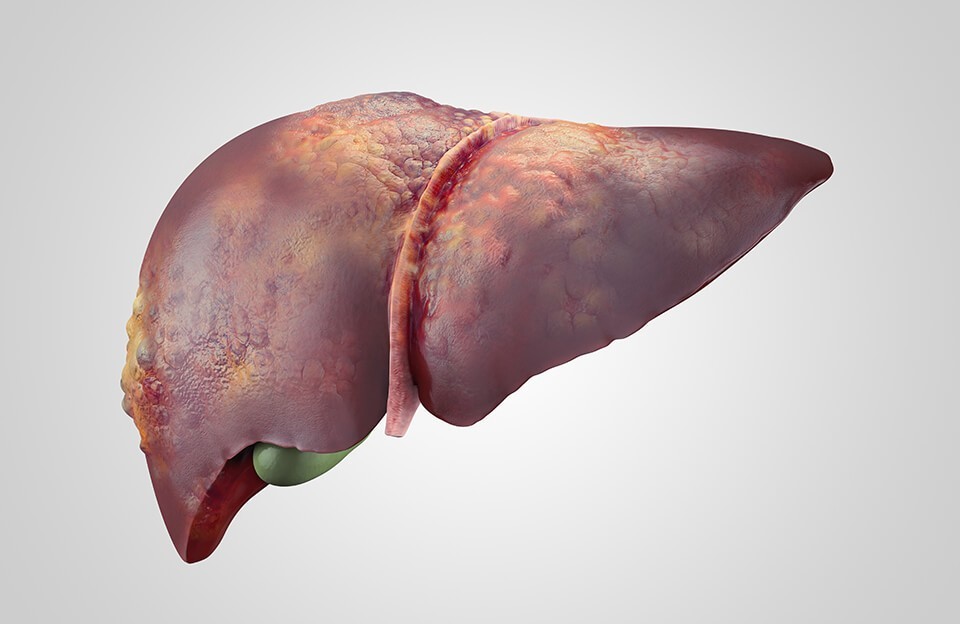
Liver cancer can be primary or metastatic (secondary). About 85% of primary tumours arise from liver cells (hepatocytes); this is hepatocellular carcinoma. Less often the tumour forms from the lining of the bile ducts (cholangiocarcinoma). In most cases, however, cancer in the liver is secondary and is caused by metastases from primary tumours of the large bowel, stomach, ovaries, uterus or lungs.
Symptoms of liver cancer
The clinical signs of liver cancer are very often mistaken for gallstone disease, cholecystitis, hepatitis or cholangitis. In the early stages a person feels constantly weak, appetite decreases or disappears, and drowsiness and apathy set in. As the disease progresses, the following symptoms appear:
Nausea and vomiting.
Alternating constipation and diarrhoea.
A dragging pain under the right ribs.
Itchy skin.
A firm lump under the right ribs that can be felt on examination.
Yellowing of the skin.
Pale stool and dark urine.
In the late stages these are joined by ascites, nosebleeds, characteristic spider veins on the palms (telangiectasia), anaemia and bleeding from the gastrointestinal tract. If the tumour ruptures, peritonitis or bleeding into the abdominal cavity develops.
Stages of the disease
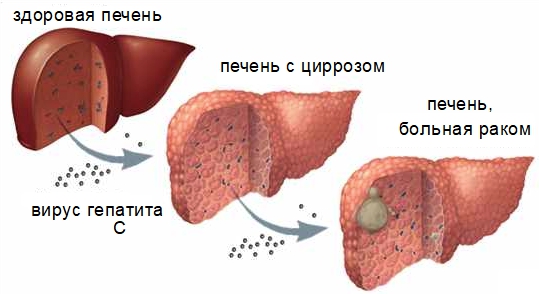
Depending on the structural and functional changes in the organ, liver cancer goes through the following stages:
Stage 1. At the beginning the tumour grows slowly and does not damage nearby blood vessels. At stage 1 patients usually notice no change in how they feel.
Stage 2. The tumour grows faster and may involve the blood vessels of the liver. At this stage it is no larger than 5 cm in diameter.
Stage 3. Several small tumours form in the liver tissue, with one comparatively larger tumour dominating. The dominant tumour is more than 5 cm in diameter and grows into the liver tissue, veins and arteries. This stage is divided into 3A, 3B and 3C. At stage 3A there are no signs of spread to the lymph nodes. At stage 3B there are isolated metastases in the regional lymph nodes, and at stage 3C metastases are found not only in the lymph nodes but also in other organs.
Stage 4. The tumour can be of any size, and metastases are found in the most distant organs.
Diagnosis
Diagnosis starts with a general examination of the patient and palpation of the abdomen. The first imaging method is ultrasound, which shows focal changes in the organ. Ultrasound is used not only as a diagnostic method in its own right but also to guide a targeted percutaneous biopsy. The following examinations are also used:
Blood biochemistry to measure liver enzymes.
Can liver cancer be cured?
Long experience shows that liver cancer can be cured completely, without a risk of recurrence, only at an early stage and only with comprehensive treatment, which may include a liver transplant.
Treatment options
A diagnosed malignant tumour of the liver is treated with chemotherapy and surgery.
Surgery
At an early stage, when the tumour is no larger than 3 cm in diameter, it is removed surgically (hemihepatectomy or lobectomy). The tumour is considered operable if there is no cirrhosis in the organ and the blood vessels are not involved.
Chemotherapy
Chemotherapy for liver cancer uses drugs such as 5-fluorouracil and methotrexate. It is often combined with surgical removal of the tumour. Another method is chemoembolisation. The procedure delivers the drugs selectively: they are injected into the tumour while the blood vessel that feeds it is blocked at the same time.
Folk remedies
The effectiveness of folk remedies for liver cancer is doubtful. Alternative medicine is not a substitute for surgery and chemotherapy. Herbalists sometimes suggest remedies based on birch sap, chaga mushroom, dandelion roots and leaves, or lingonberry berries and leaves, but any such remedies may be used only as a supplement and only after agreeing it with an oncologist.
Is liver cancer completely curable?
Even when the tumour is removed surgically at an early stage, no more than 20% of patients pass the five-year survival mark. This type of cancer is highly aggressive and spreads quickly, so early diagnosis and timely treatment matter most.
Didn't find the answers you were looking for? Call us or leave a request, and our medical coordinators will give you detailed, individual information about clinics and specialists abroad.